












































 By
By
Latest Update: The UK government is tightening regulations to protect the next generation from nicotine exposure.
1. Policy Outlook: The New Ban on In-Car Vaping (Informational)
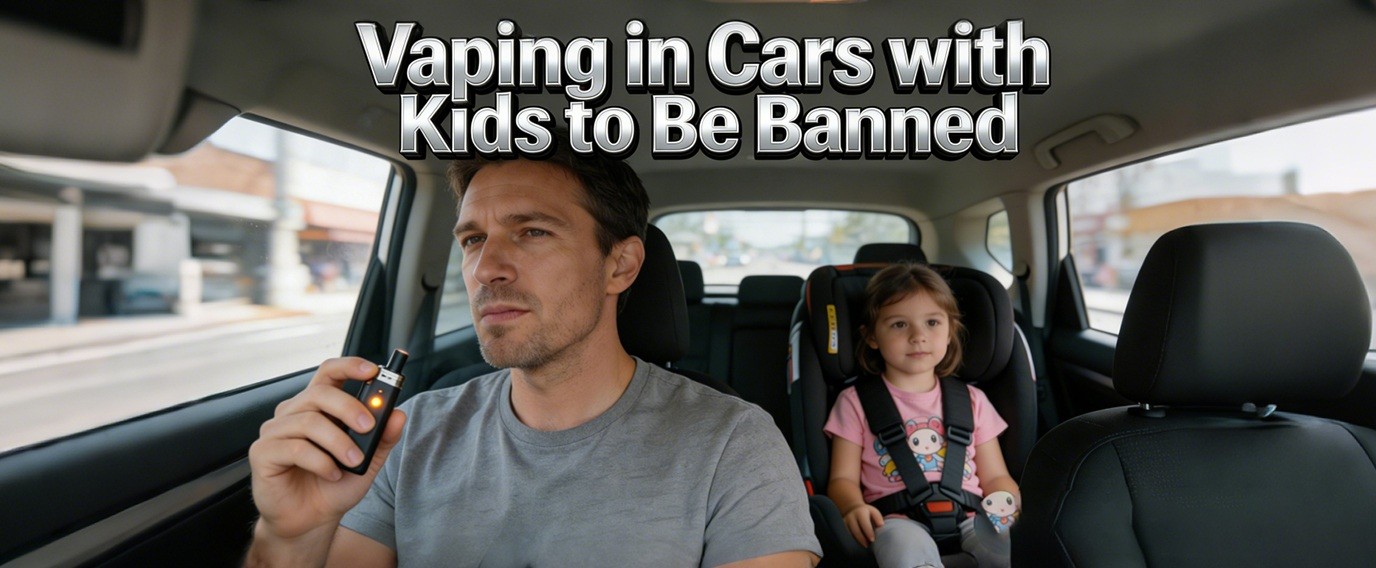
The landscape for vaping in the UK is shifting rapidly. Following the ban on disposable vapes and flavour restrictions, the government is now targeting a specific environment: the family car. According to recent reports from Sky News, ministers are considering a definitive ban on vaping in private vehicles when children under the age of 18 are present.
Expert Insight
According to Sky News, "The proposed ban aims to close the loophole between traditional smoking and vaping in cars, ensuring that children are shielded from nicotine exposure in all confined vehicular environments."
This move is part of the broader Tobacco and Vapes Bill, a landmark piece of legislation aimed at creating the first "smoke-free generation." For many parents, this means the "vaping loophole" that existed for years is finally closing.
2. Legal Analysis: Aligning Vapes with Traditional Cigarettes (Legal/Policy)
Since 2015, it has been illegal to smoke traditional tobacco in a car with anyone under 18. However, e-cigarettes were historically excluded from this law. The new policy aims to fix this legal inconsistency.
Key Legal Pillars:
- Uniform Enforcement: The law will likely apply to both the driver and passengers, regardless of whether the windows are open.
- Public Health Mandate: Authorities argue that the legal definition of "clean air" in a vehicle should not distinguish between smoke and aerosol when minors are involved.
- Regulatory Alignment: By treating vaping similarly to smoking in confined spaces, the government simplifies enforcement for police and local authorities.
3. Understanding the Risks: Why "Just Vapour" is a Concern (Concern-based)
Many users mistakenly believe that vape clouds are merely water vapour. In reality, these aerosols contain nicotine, flavourings, and various chemicals. In the small, enclosed volume of a car, these substances reach much higher concentrations than in open spaces.
"The concentration of fine particles in a car can spike significantly within seconds of vaping, posing a direct inhalation risk to children whose lungs are still developing."
Primary Concerns for Parents:
- Second-hand Exposure: Vulnerable respiratory systems can be irritated by the chemicals found in e-liquid aerosols.
- Third-hand Residue: Nicotine and other particles settle on car seats and surfaces, which children may touch or lick.
- Behavioural Normalisation: Seeing parents vape in the car can make the habit seem harmless, increasing the likelihood that children will take up vaping in their teens.
FAQ
Q1: Is vaping in cars with kids currently illegal in the UK?
While smoking cigarettes in cars with children has been illegal since 2015, the specific ban on vaping is currently a proposal under the 2025/2026 legislative agenda. It is expected to become law shortly as part of the Tobacco and Vapes Bill.
Q2: Does opening the window allow you to vape with kids in the car?
No. Based on existing smoking laws, opening a window or sunroof does not make it legal. The confined space still allows for significant exposure, and the law is expected to be an absolute ban regardless of ventilation.
Q3: What are the health risks of second-hand vaping in cars?
Second-hand aerosol contains nicotine and ultra-fine particles that can be inhaled deep into the lungs. In a car, these levels can become toxic, potentially leading to asthma flare-ups or other respiratory issues in children.
Q4: Why is the UK government banning vaping in cars with children?
The goal is twofold: to protect children from the direct health impacts of nicotine and to prevent the social normalisation of vaping. The government aims to ensure that no child grows up thinking nicotine use is a standard part of daily travel.
Q5: What is the expected fine for violating the car vaping ban?
Lawmakers have suggested that the penalty will mirror the current fine for smoking in cars with children, which is a £50 fixed penalty notice.
Q6: Does this ban apply to 17-year-olds driving themselves?
Under current proposals, if a 17-year-old is driving alone, the ban may not apply. However, if there is another person under 18 in the vehicle, the ban would be strictly enforced for all occupants.